 English
  Cymraeg
Whitchurch History Cymru
The Naming of Streets
Some people say that the roundabout at the top of the village is over one mile in circumference, and that it’s the biggest roundabout in Europe
A hundred and twenty years ago, at the beginning of the 20th century we had one road running from the southern boundary of the parish, continuing to the north of Tongwynlais (and probably beyond) with a single name; the Merthyr Road. This could well have been the longest in the area and was causing all sorts of problems to the posties delivering letters and parcels to residents of the rapidly growing village at that time
Many of the new blocks of houses being built had been given their own names (Millwards Terrace for example), but that just seemed to confuse even more. The streets of the parish were just confusing, and Merthyr Road was just too long and needed to be broken up into more manageable slices
The parish council had been pondering on the problem for quite a while and it was discussed at length. A special parish meeting was held in August 1905 for the purposes of naming the streets, with the object of fitting platenames and numbering the houses in the parish. They concluded that with a few exceptions, the names by which the roads and streets were currently known would be retained
In Tongwynlais, however, it was decided to change ‘Spout Road to Ironbridge Road, Canal Parade to Railway Terrace and the road leading to the Old Ton Inn to Church Road’. In addition, ‘the road leading from the Hollybush would in future be known as Pantmawr Road’
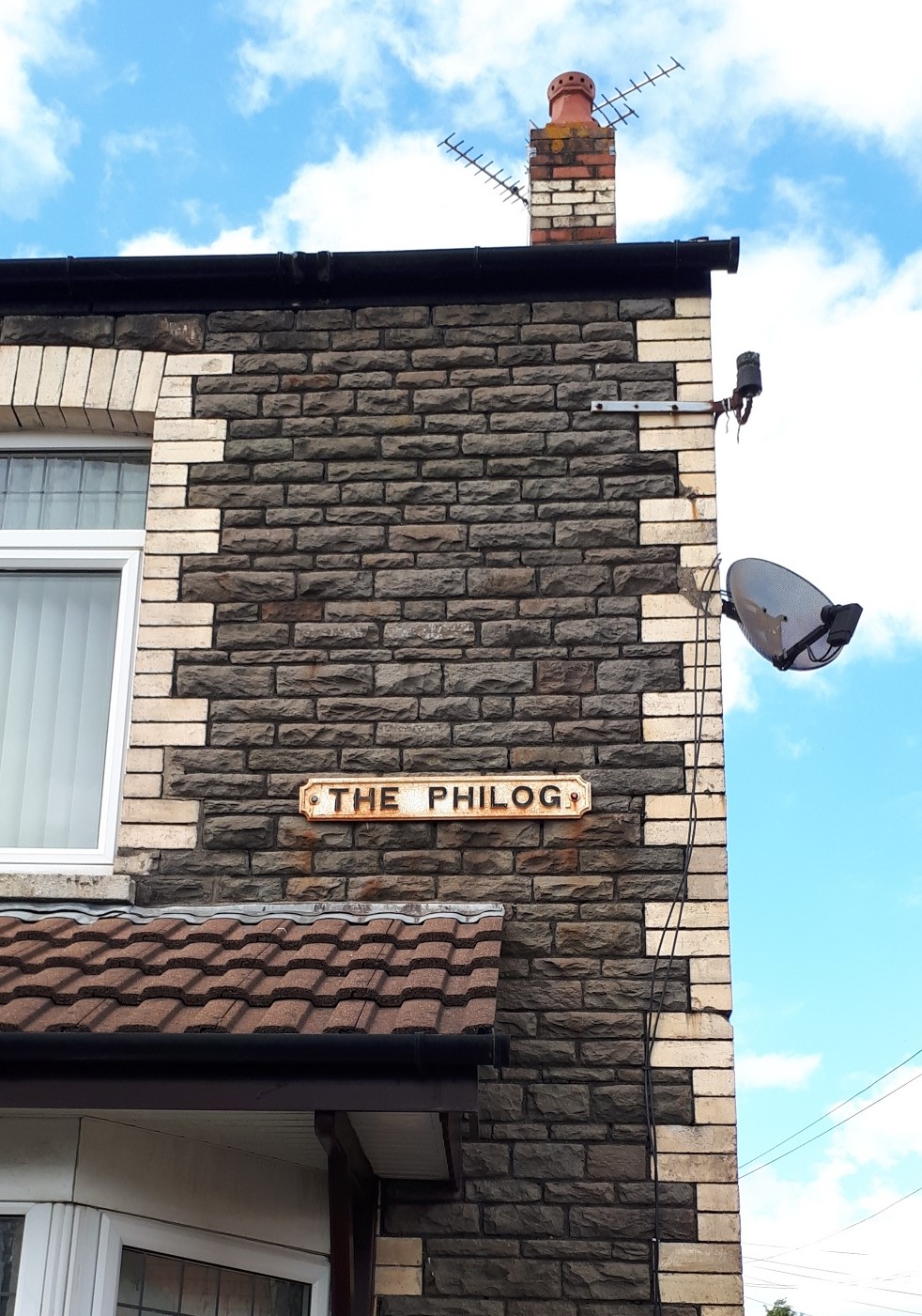
It was also decided to divide the Merthyr Road ‘from the Cross Inn to the Library into sections. From the boundary of the parish near the Cross Inn to Old Povey’s House on the Philog, The Philog; from the latter to the bridge near the blacksmiths shop Wauntreoda; the next stretch to the Plough Hotel Hafod Road; and from thence to the Library Penllyne Road’ ‘In addition, ‘Park Road was selected; and Heol Don for the road leading to Llandaff Station from Velindra Road’
There was a problem however! The parish council did not have the powers to change the names and they would have to get the approval of the Dinas Powis and Llandaff Rural District Council, who were the highway authority. With some minor tweaks the changes were agreed, and the newspaper advertisement dated 1st November 1905 shown below confirms the names. There is one difference, however, the main section which was to be called Hafod Road, remained as Merthyr Road; and so it is even today!
The photograph shows one of the 1905 cast iron platenames which are still around, even today. How many can you find?