English
  Cymraeg
Whitchurch History Cymru
Pantmawr Road
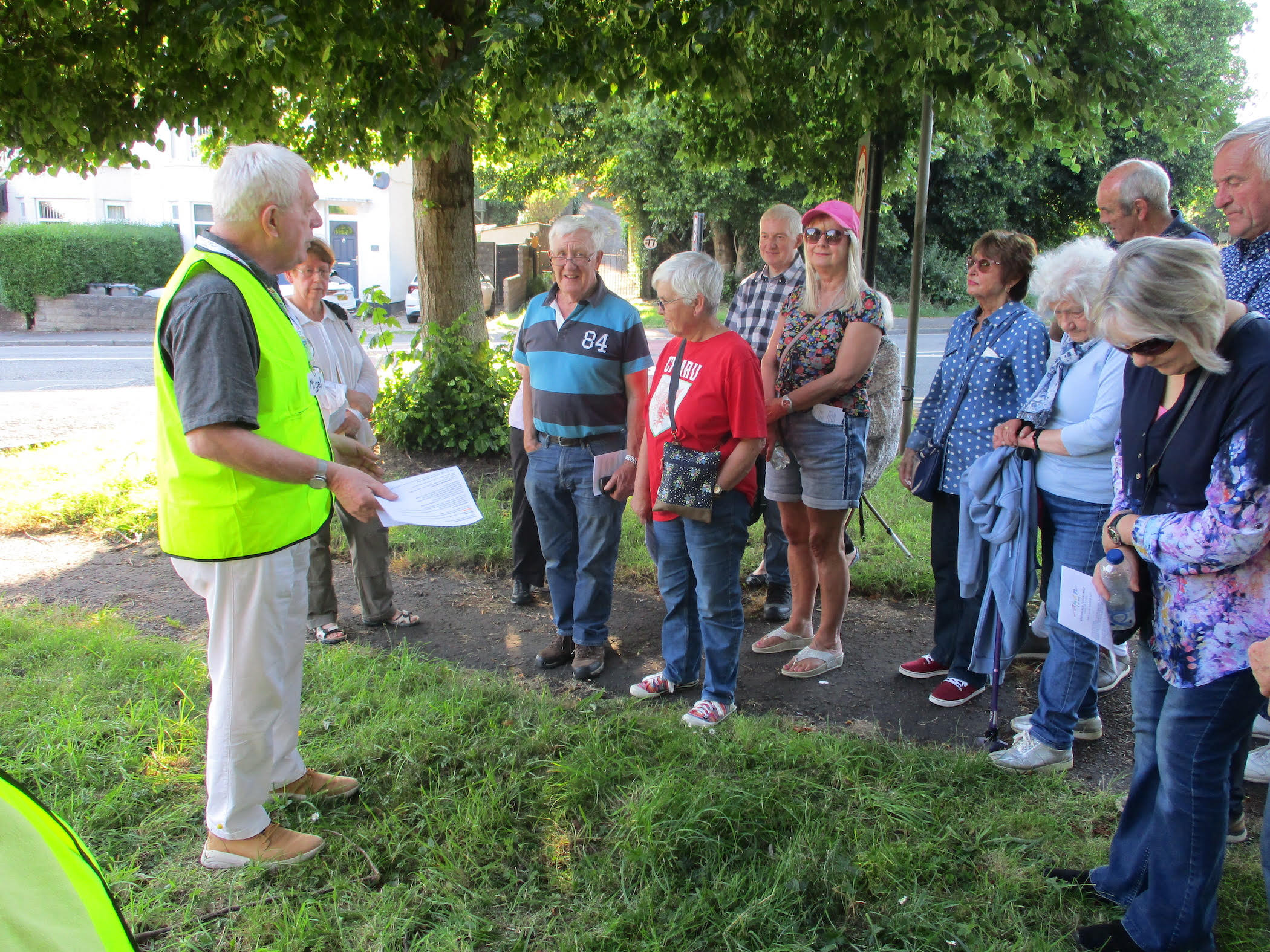
WHITCHURCH FESTIVAL WALK
Tuesday 25th June 2024 repeated September 2024
A WALK ALONG PANTMAWR ROAD from Manor Way to the Hollybush
PANTMAWR ROAD
An ancient drover’s way. Until the early 1930s, the road was called Rhubina Road and extended from the Hollybush, eastwards to the Twmpath in Rhiwbina and then up the hill to Rhiwbina Farm
Looking east, beyond the A470, Pantmawr Road continues. Pentwyn Uchaf (Upper Pentwyn) is now the club house to Whitchurch (Cardiff) Golf Club. Opposite is Pantmawr Cemetery, opened in 1923 and beyond is Ffynnon-wen Farmhouse. Just before the Twmpath is Pantmawr, yet another ancient farm
ASHGROVE BARN
This is the white-painted farm building, prominent from the A470
It isn’t the old farm, but was an ancient barn and farmyard adjacent to Ashgrove. Access to the yard is via the long farm track. In the early 1950s the barn was converted into a family home
ASHGROVE FARM
Originally known as Pentwyn Isaf (Lower Pentwyn). The farmhouse, tucked just below Ashgrove Barn, and is a substantial two and three-storey stone building. The farm is hundreds of years old (first reference in 1708) and latterly comprised of 16 acres of land and 7 fields, part of the Tredegar Estate. Much of this land was sold as part of Ashgrove Barn, however two acres of land were retained as a garden
THE COTTAGES
Two semi-detached cottages alongside the farm track were built after WW2; one occupied by Miss Wride of Ashgrove farm and the second by Mr Morgan, the headmaster of the newly opened grammar school
GERDDI TY CELYN
In the 1980s, the 2 remaining acres of Ashgrove Farm were developed to build five impressive detached houses. One of the first occupants was Charlotte Church
PROVIDENCE PLACE
In 1808 a chapel called Ebenezer was built on this site. 60 years later, a new, larger chapel called Tabernacle was built in Whitchurch Village. Ebenezer remained as a Sunday School for many years and was later converted into the three cottages we see today
Herbert Bevan was an accountant in Holly Cottage, and Mr Llewellyn, a tinplate worker lived at Rose Cottage. Number 51 is now home to ‘Cake Expectations’!
Much altered, the adjacent cottage was once part of a terrace of six One was home to the Olson family, who were confectioners. They were still there in 1937
LLWYNCELYN
Now demolished, Llwyncelyn was built as a graceful house c1900, at the end of a long driveway. It was the home of Johnny Williams, one of Wales’s most famous rugby sons. He died in WW1 at Mametz Wood
Ernie Broad suggests that Llwyncelyn was later home to the Mossford family
Today Llwyncelyn has three or four impressive houses in the grounds
TERRACED HOUSES
Both rows of terraced cottages were probably built after WW1
Number 9 was a general shop run by Edith Thomas. Simon Lewis was a boot repairer at 23 and George Heath was a blacksmith at 29 in the years before WW2
CORYTON RISE
This housing development, built 1960s was on land acquired from Ashgrove Barn. For many years Coryton Rise was home to Winston Griffiths and his family. Winston is still remembered for initiating the Whitchurch Festival. More recently the estate became famous when a police helicopter crashed into one of the houses (fortunately no one was killed!)
TY GWENITH
This house was originally detached and built at the end of the 19th century. John Griffiths was living there in 1902 when his 14-year-old son died. John was still there twenty years later
THE SOUTH SIDE
The semi-detached houses fronting Pantmawr Road on the southern side were mainly built in the years between the world wars by local contractors. Behind the houses lie Lon-y-Celyn and Heol Pantycelyn, built later in the century
FERNHILL
Home of the Priday family. Alun Priday, another of Wales’s rugby greats, lived here with his parents in the 1950s
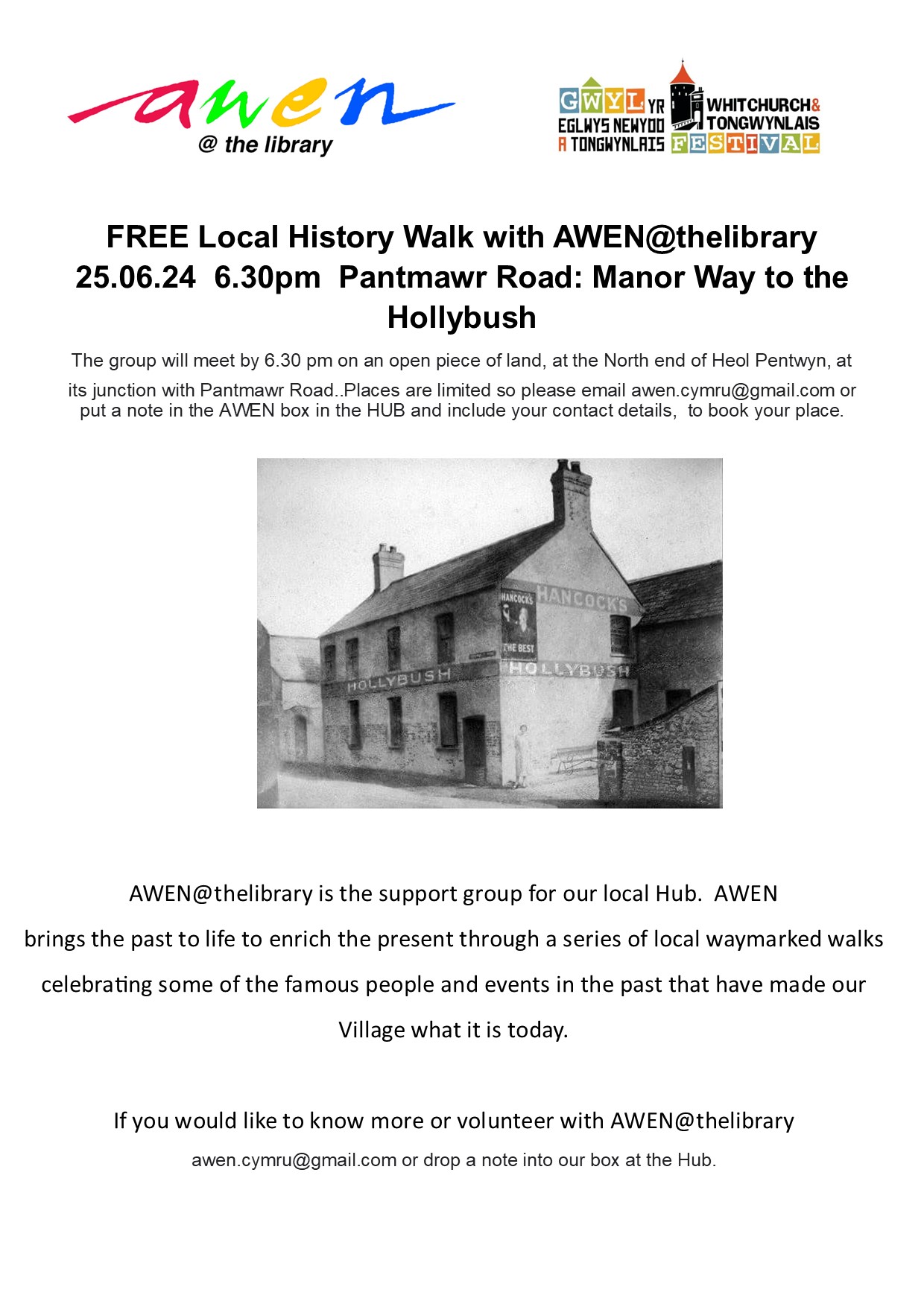
HOLLYBUSH INN
There is strong evidence that the Hollybush Inn is many hundreds of years old. The first mention of a pub is 1828, but fronting onto the turnpike road (opened in 1767) with its stabling makes it a candidate for an old coaching inn. It is shown on Yates map of 1799
Joseph Jones was the publican in 1841, and his son-in-law was there twenty years later. The Vicar of Whitchurch was a lodger at the inn in 1861
HOLLYBUSH COTTAGE
In the distance is Hollybush Cottage. One of a number of small rural cottages fronting onto Pendwywallt (first mentioned in 1712)
HOLLYBUSH ESTATE
Built by Cardiff Council after Whitchurch became part of the city. Beech House is the tallest block in the area and has become a local landmark
LLWYN MALLT FARM
This farm and its fields are now lost under the interchange at Junction 32 of the M4 motorway. All that remains is an intriguing footpath alongside McDonalds Restaurant at Coryton
CARDIFF RAILWAY
Built by the Bute family in 1910 to bring coal from the Rhondda Valleys to the Bute Docks in Cardiff. It was never commercially successful, but remains a vital part of the local rail system, now being upgraded as Cardiff Metro
TY CLYD FARM
Beyond the railway is Ty Clyd, an ancient farm. At one time it was owned by the Booker family and was later acquired as the home farm for the Whitchurch Hospital
TITHE BARN
To the south near the entrance of the hospital, was the ancient Tithe Barn. It was many hundreds of years old when it was totally destroyed by fire in 1900
Thank you for joining us on this walk along yet another of our unassuming local streets with its surprising local history
Explore the other walks on this site, join AWEN@thlibrary by completing a form at Whitchurch Hub or email awen.cymru@gmail.com